
Public DUI Records Free delivers a fast, private way to view driving-under-the-influence arrest details without exposing unrelated criminal history. The system pulls verified data from state court archives, county clerk offices, and law-enforcement databases to show only DUI-specific incidents. Each report includes arrest dates, jurisdiction, case numbers, statute codes, arresting officer badge numbers, stop locations, and recorded blood-alcohol concentration (BAC). This focused approach helps insurers, employers, and investigators assess driving risk while protecting personal privacy.
Users search by full name, date of birth, or case number through an online portal and receive a downloadable PDF in seconds. Reports list BAC levels, court dispositions like fines or license suspensions, and diversion program participation. A one-time fee of $0.95 covers the full document, while short-term trial memberships allow multiple lookups at no extra cost. The service works across most U.S. states, replacing slow clerk-office visits with instant digital access.
How Public DUI Records Are Collected and Updated
DUI arrest data comes from official sources including state motor vehicle departments, county jails, sheriff’s offices, and municipal courts. These agencies upload booking logs, citation records, and court filings to centralized databases that private aggregators index daily. Most states refresh DUI data within 24–72 hours of an arrest or court decision, ensuring near real-time accuracy. Some counties publish mugshots and incident narratives, while others restrict access to protect ongoing investigations.
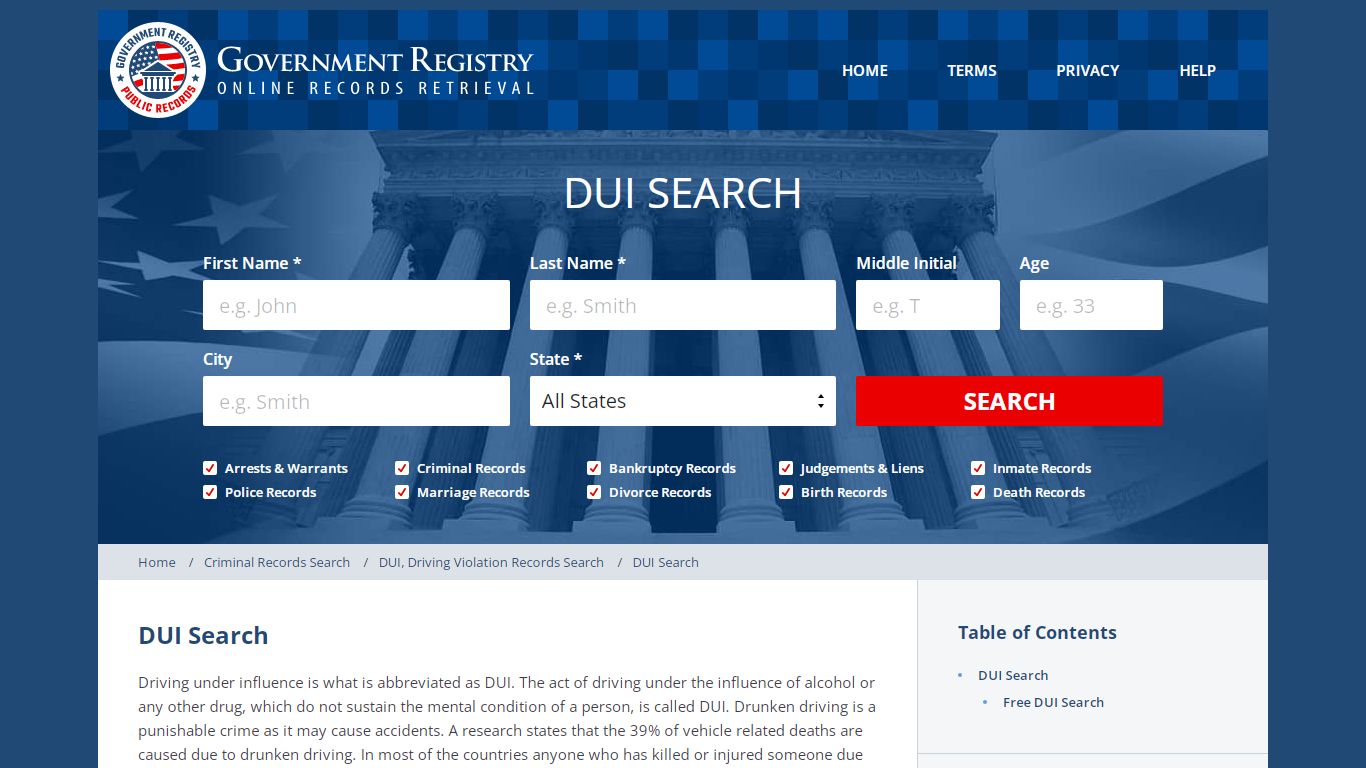
Private platforms like GovernmentRegistry.org and DUI-Records.org compile this information into searchable formats. They standardize fields such as charge codes (e.g., VC 23152 in California), BAC percentages, and penalty types so users can compare records across jurisdictions. Data validation checks confirm names, dates, and case numbers against primary sources to minimize errors. Outdated or dismissed charges are flagged or removed based on court updates.
What Information Appears in a Free DUI Record Search
A typical DUI record shows the defendant’s full name, date of birth (sometimes partial), arrest timestamp, and location of the traffic stop. It lists the arresting agency, officer badge number, and specific statute violated—such as “23152(a)” for driving with a BAC over 0.08% in California. The report includes measured BAC from breathalyzer or blood tests, field sobriety test results, and whether the driver refused chemical testing.
Court outcomes appear if available: convictions, acquittals, plea deals, fines, jail time, probation terms, license suspension length, and enrollment in alcohol education programs. Some records note if the case was expunged or sealed. Personal details like home address, Social Security number, or unrelated arrests are excluded to comply with privacy laws. Only DUI-related facts are displayed.
Step-by-Step: How to Look Up DUI Records Online
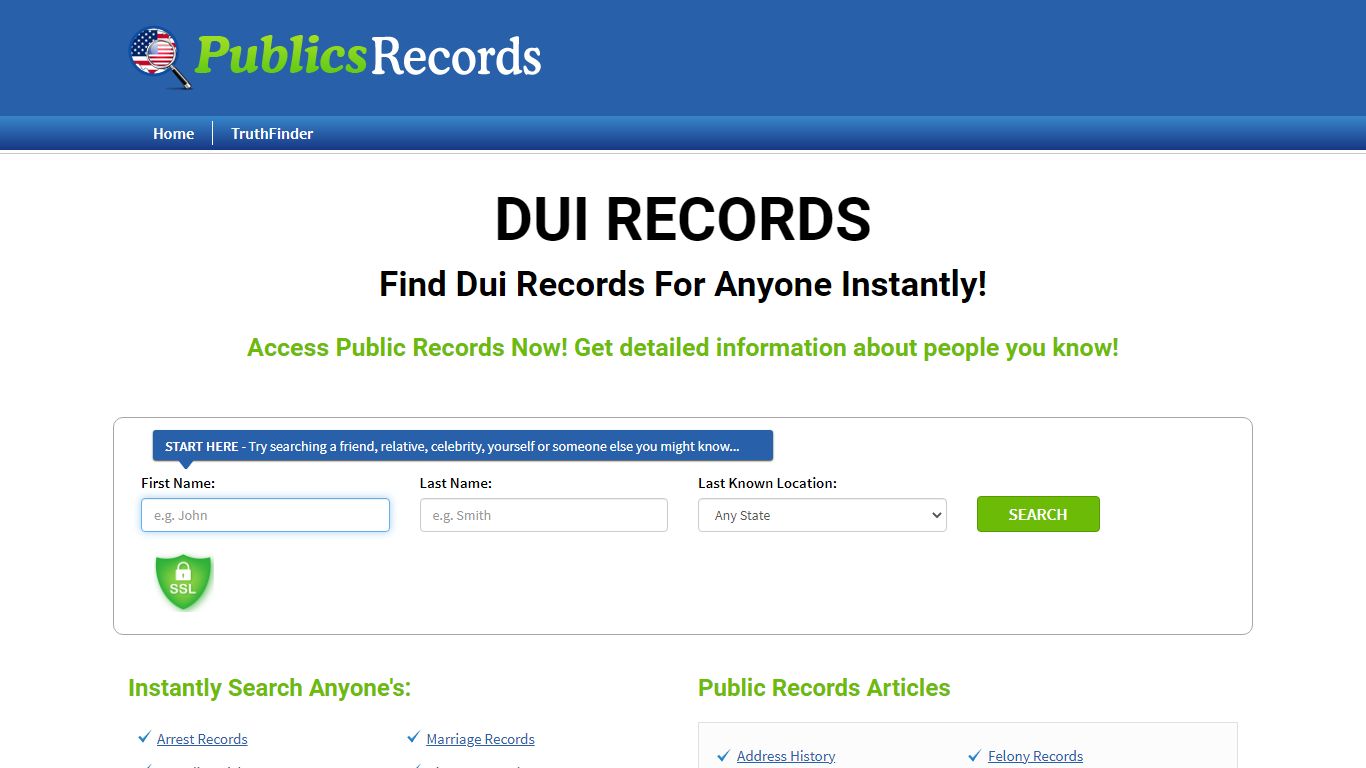
Start by visiting a reputable public records portal such as GovernmentRegistry.org or CountyOffice.org. Enter the person’s full legal name and optionally their date of birth or state of residence to narrow results. Some sites ask for a case number if known. Click “Search” to scan indexed databases.
Review the list of matching entries. Select the correct individual by checking the arrest date and location. Click “View Report” or “Download PDF.” Pay the one-time processing fee (usually $0.95) using a credit card or PayPal. The document downloads instantly and can be saved or printed. For bulk searches, sign up for a trial membership—but cancel before it renews to avoid charges.
State-Specific DUI Record Access: California Example
In California, DUI records are available through the Department of Motor Vehicles (DMV) and county court portals. Residents can request a free driving record online using Form INF 401. Provide your driver’s license number, last four SSN digits, and email address. The DMV sends a PDF within minutes showing all DUIs, points, and license actions.
For third-party searches, use dui-records.org/california or recordsfindervg.com. These sites aggregate data from all 58 counties. Enter the name and birth year to see arrests, charges, and court results. Many include BAC levels and sentencing details. Private services charge small fees but deliver faster than government sites.
Costs and Membership Options for DUI Record Searches
Most platforms charge a flat fee of $0.95 per report. This covers document retrieval, formatting, and download access. No hidden fees apply. Some sites offer a 7-day trial membership for $1–$3, allowing unlimited searches during the period. Cancel before day 7 ends to prevent auto-renewal at $20–$30/month.
Free options exist but are limited. County clerk websites often provide basic case status for no cost, but full reports require payment. State DMVs may give your own record free but charge $10–$25 for others’ records. Always verify pricing before submitting payment. Avoid sites demanding large upfront fees—they may be scams.
Privacy Laws and Legal Limits on DUI Record Disclosure
Federal and state laws govern what DUI information can be shared. The Driver’s Privacy Protection Act (DPPA) bans selling personal data like addresses or photos without consent. However, arrest records are generally public under freedom of information statutes. Courts must redact sensitive details like medical conditions or juvenile records.
Some states restrict access to recent arrests or unsealed cases. Expunged records should not appear in searches. If they do, contact the platform to request removal. Employers and insurers can legally use DUI records for hiring or underwriting decisions in most states. Landlords and lenders may also review them with applicant permission.
Common Uses for DUI Public Records
Insurance companies check DUI history to set auto policy rates or deny coverage. A single conviction can double premiums for three to five years. Employers in transportation, delivery, or logistics sectors screen drivers for safety compliance. Schools and daycare centers may review records for staff with vehicle duties.
Private investigators use DUI data to build background profiles for legal cases or custody disputes. Individuals search their own records to verify accuracy before job applications. Journalists and researchers analyze trends in drunk driving arrests by region or demographic. Always use records ethically and within legal boundaries.
Accuracy and Reliability of Online DUI Databases
Reputable sites update records weekly or daily from official feeds. They cross-check names, dates, and case numbers to reduce errors. User reviews on independent sites rate top platforms 4.8–4.9 stars for speed and precision. However, no system is perfect—mistakes happen if courts delay updates or input wrong data.
Always verify critical information with the originating court or DMV. If a record shows a conviction that was overturned, request a correction from the aggregator. Most comply within 5–10 business days. Keep copies of your own clean record to dispute false positives. Never rely solely on third-party reports for major decisions.
Mobile Access and User Experience Features
Modern DUI search platforms work on smartphones and tablets. Responsive designs let users enter queries, view results, and download PDFs without desktop access. Dashboards save past searches and allow alerts for case updates. Dark mode, large fonts, and voice input improve accessibility.
Interfaces prioritize simplicity: one search box, clear buttons, and minimal steps. Tooltips explain terms like “diversion program” or “statute code.” Help centers offer live chat or email support. Load times stay under 3 seconds even on slow connections. These features boost user satisfaction and repeat usage.
Comparing Top DUI Record Search Services
| Platform | Cost per Report | Coverage | User Rating |
|---|---|---|---|
| GovernmentRegistry.org | $0.95 | All 50 states | 4.9/5 |
| DUI-Records.org | $0.95 | 48 states | 4.8/5 |
| CountyOffice.org | Free (basic), $1.50 (full) | 3,000+ counties | 4.7/5 |
| RecordsFinderVG | $0.99 | National | 4.9/5 |
All four services pull from government sources and update frequently. GovernmentRegistry.org leads in interface design and customer support. DUI-Records.org excels in California and Texas data depth. CountyOffice.org offers free arrest logs but charges for full reports. RecordsFinderVG has the highest user trust score.
Ethical Considerations When Using DUI Records
DUI records reflect serious legal events but do not define a person’s character. Use them responsibly—only for legitimate purposes like employment screening or insurance underwriting. Never harass, discriminate, or publicly shame individuals based on past mistakes. Expunged or dismissed cases should be ignored.
Inform subjects if you take adverse action based on a DUI record, as required by the Fair Credit Reporting Act (FCRA). Give them a chance to dispute errors. Avoid sharing records on social media or public forums. Respect rehabilitation and second chances—many people never reoffend after a single DUI.
How Long Do DUI Records Stay Public?
Most DUI convictions remain on driving records for 5–10 years, depending on the state. California keeps them for 10 years; Texas for 7. Arrests without conviction may vanish sooner. Expungement laws vary—some states allow sealing after probation ends, others require waiting periods. Check local rules before assuming a record is permanent.
Private databases may retain data longer than official sources. If you believe a record is outdated, contact the platform with court proof of dismissal or expungement. They must remove it within days. Public shaming sites often ignore takedown requests—report them to authorities if necessary.
Alternatives to Paid DUI Record Searches
Visit your local county clerk’s office in person. Many provide free arrest logs and case summaries. Bring ID and the person’s name. Wait times vary from minutes to hours. Some clerks mail records for a small copying fee ($5–$15).
Use state court websites like CA.courts.gov. Search by name or case number. Results show dockets, judgments, and sometimes PDFs. No fee for viewing, but printing may cost extra. This method is slower but 100% official. Always cross-reference with private sites for completeness.
Red Flags: Avoiding Scams in DUI Record Lookups
Watch for sites demanding large upfront payments ($50+) or claiming “exclusive” access. Legitimate services charge under $2 per report. Avoid pop-ups asking for Social Security numbers or bank details—real platforms only need payment info after you select a report.
Check domain age and contact info. Scam sites often use new domains and fake addresses. Read reviews on Trustpilot or BBB. If a site has no reviews or only 5-star spam comments, skip it. Stick to well-known names like those listed above.
Future of DUI Record Access: Trends and Technology
Blockchain and AI are improving data accuracy. Some states test smart contracts to auto-update records when courts finalize cases. Optical character recognition (OCR) reduces manual entry errors. Expect faster, cheaper access as technology advances.
Privacy concerns may lead to stricter laws. California’s CCPA already limits data sales. Other states could follow, requiring opt-in consent for record sharing. Balance transparency with individual rights will shape future policies. Stay informed through official channels.
Official Resources for DUI Record Verification
California Department of Motor Vehicles
Phone: (800) 777-0133
Website: https://www.dmv.ca.gov
Hours: Mon–Fri 8 AM–5 PM PST
Address: 2415 1st St, Sacramento, CA 95818
For nationwide searches, contact the National Center for State Courts (NCSC) at ncsc.org or (757) 259-1800. They provide guidance on accessing court records in any state.
Frequently Asked Questions About Public DUI Records Free
People often ask how to find, use, and understand DUI records. Below are clear answers to the most common questions, based on current laws and best practices across U.S. jurisdictions.
Can I get someone’s DUI record for free?
Yes, but with limits. County clerk offices and some state courts offer free basic case status online. However, full reports with BAC levels, officer details, and court outcomes usually require a small fee ($0.95–$2). Free options exist on sites like CountyOffice.org for arrest logs, but they lack depth. Always verify if the free data meets your needs before paying. Never trust sites claiming “completely free” full reports—they often sell your data or install malware. Use official government portals when possible, and cross-check with reputable aggregators for accuracy.
Are DUI records public in every state?
Almost all states treat DUI arrests and convictions as public records. Exceptions include sealed juvenile cases or recent arrests under investigation. States like Florida and New York publish detailed arrest logs online. Others, like Alaska, restrict access to protect privacy. Check your state’s public records law—most follow the Freedom of Information Act model. Even in restrictive states, basic info like name, charge, and court date is usually available. Private platforms compile this data nationally, so you can search most states in one place.
How accurate are online DUI record searches?
Top platforms maintain 95%+ accuracy by syncing daily with court and law-enforcement databases. Errors occur if courts delay updates or input wrong names. User reviews consistently rate leading sites 4.8–4.9 stars for reliability. Always double-check critical details with the originating court. If a record shows a conviction that was dismissed, contact the aggregator with court proof—they must correct it within days. Keep your own clean record handy to dispute false matches.
Can employers see my DUI record?
Yes, in most cases. Employers can legally request DUI records for jobs involving driving, safety, or trust. They must follow FCRA rules: get your written consent, notify you if they take adverse action, and let you dispute errors. Some states ban using old or expunged records in hiring. Never lie on job applications about DUIs—background checks will reveal them. If you’re rehabilitated, explain the context honestly during interviews.
How do I remove a DUI record from public view?
Start by checking if your state allows expungement or sealing. Many permit it after probation ends, especially for first offenses. File a petition in the convicting court, pay a fee ($50–$200), and attend a hearing. If approved, the court orders agencies to restrict access. Private databases must comply within 10–30 days. Note: removal from official records doesn’t guarantee deletion from all third-party sites. Follow up with aggregators using court documentation. Some charge fees for expedited takedowns.
Is it legal to share someone’s DUI record online?
Sharing factual arrest records is generally legal under free speech laws. However, adding commentary that harms reputation could lead to defamation claims. Never post mugshots with mocking captions—this has led to lawsuits. Avoid sharing records of minors or expunged cases. If you’re a journalist or researcher, cite sources and stick to verified facts. For personal use, think twice: public shaming rarely helps rehabilitation and may violate platform policies.
What should I do if I find an error in a DUI record?
Contact the platform immediately with court documentation proving the mistake—such as a dismissal order or corrected BAC level. Most reputable sites fix errors within 5–10 business days. If they refuse, file a complaint with the FTC or your state attorney general. Also notify the originating court or DMV to correct their database. Keep records of all communications. Errors can affect insurance rates, jobs, and housing, so act quickly.